

The FDA recently released a highly anticipated guidance, “Monoclonal Antibodies: Streamlined Nonclinical Safety Studies Guidance for Industry”, to assist sponsors in implementing streamlined approaches for nonclinical safety assessments of monoclonal antibodies that recognize a single molecular target (i.e., monospecific antibodies). This guidance is intended to apply broadly to development programs for monospecific antibodies in any indication except those reviewed by the Office of Oncologic Diseases. This guidance builds on and complements existing FDA and ICH nonclinical safety guidances, which are listed in the Resources section at the end of this blog.
The streamlined approaches and other insights discussed in this guidance have been provided by the FDA following more than 30 years of testing and regulating monospecific antibody products for therapeutic uses.
Background
Monoclonal antibodies are complex molecules engineered to target specific antigens with high precision, for purposes that include serving as diagnostic tools and therapeutic agents. Since the FDA approval of the first monoclonal antibody in 1986 for the prevention of transplant rejection (i.e., muromonab-CD3), the Agency and other regulatory bodies have gained significant experience with these products in various patient populations treated for numerous indications. Based on this knowledge, regulatory bodies have repeatedly adapted the framework used to develop monoclonal antibodies and other therapeutic proteins. The success of these adaptions and technological advances that include the development of new approach methodologies (NAMs) support the streamlining of nonclinical safety studies, as discussed in the guidance reviewed here.
Key FDA Guidance Updates for Monoclonal Antibody Safety Studies
Recommendations for Determining Need for Chronic Toxicology Studies
In general, studies longer than 3 months in nonrodent species are not warranted to evaluate toxicities from chronic administration of monospecific antibodies when data from 3-month studies are supplemented with a weight-of-evidence (WoE) risk assessment.
A WoE risk assessment may include the following data to justify not conducting a chronic toxicology study:
- Mechanism of action and pharmacology data determined with the monospecific antibody;
- Literature-based assessment of potential toxicities associated with the molecular target;
- Toxicological and pharmacokinetic data in pharmacologically relevant species;
- Human-relevant off-tissue binding and potential secondary effects, especially if a pharmacologically relevant species was not identified;
- Clinical safety and PK data with the monospecific antibody;
- Toxicity data in animals and humans, includes when other monospecific antibodies are evaluated against the molecular target; and
- Other nonclinical data that are scientifically justified (e.g., NAMs, transgenic models, and data using surrogates).
Note that WoE assessments may also be used to determine if the evaluation of the monospecific antibody in juvenile toxicity studies, as well as reproductive and developmental studies is warranted. Together, data used for the WoE assessment appears reasonable and largely consistent with that historically considered by the FDA and other regulatory agencies to make decisions on the nonclinical testing strategy for monospecific antibodies and other products in the author’s experience.
Scenarios When Chronic Toxicology Studies are Not Needed
The guidance reviewed here provides multiple scenarios when 3-month (or longer) toxicology studies are not warranted.
- These scenarios include when there is evidence suggesting that either study data are likely to be confounded due to anti-drug antibodies (i.e., neutralizing or clearing) or animal studies are impractical due to mortalities related to severe toxicities.
- Other scenarios when 3-month (or longer) studies are not warranted include when a monospecific antibody does not bind to the target in nonclinical species or binding to it does not elicit pharmacological activity, as well as when other monospecific antibodies against the same target demonstrate that animal findings collected are not predictive of human toxicities.
Across these scenarios, adequate scientifically based justifications should be provided to support not conducting chronic toxicology or other nonclinical studies.
Other Considerations for Nonclinical Safety Studies
These considerations revolve around approaches to assess the safety of monospecific antibodies when a pharmacologically relevant species is either identified or not.
- Animal toxicology studies should employ pharmacologically relevant species.
- Pharmacology studies should demonstrate binding of the monospecific antibody to the molecular target and elicitation of the intended functional effects.
- For antibodies that have pharmacological activities similar to humans in both rodent and non-rodent species, general toxicology studies conducted in a single rodent species may provide adequate nonclinical data.
- A WoE risk assessment should be completed prior to assessing reproductive and developmental studies, as well as additional studies evaluating the monospecific antibody in support of pediatric studies.
- In the absence of a pharmacologically relevant species, safety assessment can be based on a WoE risk assessment instead of animal toxicology studies; and
- Sponsors should consider whether safety concerns identified using the WoE assessment can be addressed in clinical studies evaluating the product.
Regardless of the scenario, the strategy selected should be supported by an adequate scientifically based justification and discussed with the FDA prior to finalizing any related plans.
Implications of Streamlined Nonclinical Safety Studies
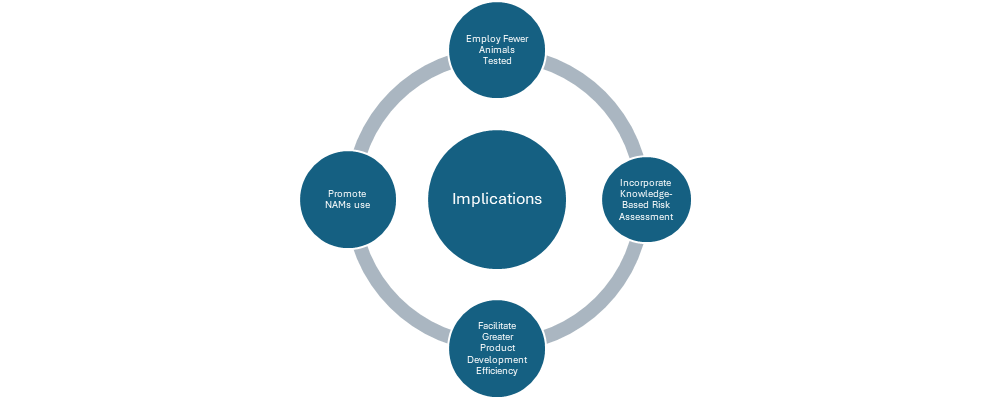
These implications should positively impact many programs in terms of decreasing the costs and the duration of testing, as well as increasing the innovation employed to develop monoclonal antibody products.
Conclusions
The FDA (and other regulatory bodies) are proactively recommending and considering more efficient and effective nonclinical testing strategies for monospecific antibodies and other products. In general, this strategy may vary based on the WoE assessment, which is impacted by factors such as patient population, molecular target, and availability of a pharmacologically relevant animal species. These factors may impact the complexity of nonclinical strategies, especially when a pharmacologically relevant species is not identified (e.g., FDA-approved Empliciti product). Therefore, sponsors are encouraged to discuss the nonclinical strategy (including WoE assessment) and other aspects of their product development plan with the FDA via an appropriate formal meeting (e.g., Type B or pre-IND meeting; for insights on Type B meetings listen to the podcast, Navigating IND Applications & Pre-IND Meetings: Key Considerations And Misconceptions).
By sharing this guidance, the FDA is making its current thinking publicly known and encouraging the use of the various types of data mentioned (including data from NAMs). Feedback on assays such as NAMs can be very useful given the limited knowledge of these assays and use in risk assessments. This approach allows sponsors to work with familiar data sources, while also leveraging data from innovative assays (e.g., NAMs) that are cheaper and faster to conduct compared to chronic toxicology studies.
At Allucent, our experts translate regulatory insight into practical, execution-ready strategies for monoclonal antibody development programs. Learn more about our A-Team’s integrated expertise across early product development.
Resources
- FDA. Formal Meetings Between the FDA and Sponsors or Applicants of PDUFA Products (2023)
- ICH S6(R1). Pre-clinical Safety Evaluation of Biotechnology-Derived Pharmaceuticals (2011)
- ICH S11. Nonclinical Safety Testing in Support of Development of Pediatric Pharmaceuticals (2020) ·
- ICH S5(R3). Detection of Reproductive and Developmental Toxicity for Human Pharmaceuticals (2020) ·
- ICH M3(R2). Guidance on Nonclinical Safety Studies for the Conduct of Human Clinical Trials and Marketing Authorization for Pharmaceuticals (2009)
- FDA. Severely Debilitating or Life-Threatening Hematologic Disorders: Nonclinical Development of Pharmaceuticals Guidance for Industry (2019)
- FDA. Rare Diseases: Considerations for the Development of Drugs and Biological Products (2023)
FAQs
Request a Proposal
Share This