
Maria-Cruz Morillo
Head, Advanced Therapeutics
(Rare and CGT)

Therapeutic Areas
Cross-Over Therapeutics
Therapeutic Expertise OverviewRare diseases are a diverse and vast group of disorders that affect not only patients but their entire families. With over 8,000 diseases identified and 95% of these lacking treatments, they impact approximately 300 million people worldwide, of which 75% affect children.
As a rare disease CRO, our expertise encompasses the entire range of clinical trials for rare disease drug development, from natural history studies to pivotal trials, addressing complex considerations including pediatric and vulnerable populations, novel biomarkers, clinical and surrogate endpoints, and innovative trial designs like basket and umbrella trials. We emphasize the integration of patient perspectives and specialize in a wide array of innovative medicines and advanced therapeutics in rare and ultra-rare disease research.
Navigating the complex regulatory landscape of rare disease drug development, including expedited pathways and orphan drug applications, and compliance with evolving guidelines, can be challenging. Additionally, clinical design aspects such as single arm pivotal studies and historical controls can present unique challenges within rare disease research.
Designing a rare disease clinical trial involves navigating unique challenges such as patient burden, selecting appropriate clinical endpoints and biomarkers, addressing placebo-related obstacles, and ensuring continuous data monitoring. Given the limited patient populations in rare disease research, adaptive trial designs play a crucial role in optimizing efficacy and safety assessments while enhancing study flexibility.
In rare disease clinical trials, finding eligible participants is challenging due to the limited and widely dispersed patient population. Successful rare disease research relies on innovative strategies to identify, recruit, and retain patients, ensuring trials have the necessary participants to generate meaningful insights.
Conducting pediatric clinical trials is both complex and essential, particularly in rare disease research. With small patient populations, severe and intricate conditions, and critical ethical considerations, these trials play a pivotal role in advancing rare disease drug development. Addressing these challenges is crucial not just for young patients but also for their families, ensuring access to innovative treatments through rare disease clinical trials.
As a rare disease CRO, we share your dedication to advancing treatments for complex and hard-to-treat conditions. We understand that rare disease and orphan disease research requires deep expertise, innovative approaches, and a steadfast commitment to patient-centric trial designs.
Conducting a rare disease clinical trial or advancing orphan disease research comes with exceptional challenges. Trials must be ethically sound, scientifically rigorous, and designed to ease the burden on patients and their families. Our approach ensures that both rare disease and orphan drug development progress efficiently, ultimately driving medical breakthroughs and improving patient outcomes.
Click icons for more information:
Our cross-functional team of regulatory, biostatistics, clinical pharmacology, medical affairs, and operational experts, leverage insights acquired thorough the conduct of 210+ rare disease clinical trials and 460+ consulting and functional programs to offer tailored strategies that enhance study design and execution. This knowledge acts as the foundation of our Rare Disease Curricula training program for all clinical operations team members participating in rare and orphan disease clinical trials.
As a rare disease CRO, Allucent has effectively navigated the regulatory pathways for rare disease and orphan drugs in a variety of rare disease clinical trials including those using adaptive designs, real-world evidence, natural history studies, as well as Pediatric Study Plans and Pediatric Investigation Plans. Our rare disease therapeutic expertise includes specialized knowledge of orphan drug development, experience submitting orphan drug designations and applications (ODA), strategies surrounding breakthrough designation, the provisions of strategic regulatory insights, interacting with regulatory authorities, and managing post-market surveillance requirements.
As a rare disease CRO, Allucent applies innovative strategies to overcome challenges associated with small patient populations. Leveraging statistical methodologies including adaptive designs or the use of natural history data and historical controls allows for the efficient use of limited data, ensuring optimal use of limited resources and accelerating the rare disease drug development process. Additionally, model-informed drug development (MIDD) and physiologically-based pharmacokinetic modelling can guide dosing decisions and support extrapolation across populations. These strategies, when combined with our regulatory consultancy expertise, enable more rapid and efficient develop program for rare disease therapeutics.
Allucent is a rare disease CRO committed to improving outcomes for patients living with rare diseases. Our rare disease therapeutic expertise includes leveraging multiple pathways, site networks, and industry collaborations to access and engage geographically dispersed patients and bring the research to the patient whenever possible. Strategies include:
Furthermore, Allucent adopts patient-centric trial designs that integrate decentralized clinical trials (DCT, telemedicine, remote monitoring, and digital health tools, enhancing accessibility through home nursing visits and patient concierge services to remove logistical barriers.
These elements make participation in clinical trials for rare disease drug development more accessible and significantly less burdensome for patients, accommodating their needs and improving their overall trial experience.
With over 70% of rare diseases manifesting in childhood, addressing challenges from pediatric populations is a primary focus for Allucent. Our experience in ultra orphan disease and rare disease research includes conducting trials in premature babies, neonates, and adolescents, using patient and family centric approaches through in-house patient education and information capabilities, decentralized trial designs, and logistical support including travel reimbursements and accommodation through-out the duration of the study.
In rare diseases, every patient’s journey is different, but no one should go through it alone. By focusing on their experiences and acknowledging the high unmet needs, we can advance clinical trials that bring us closer to easing their struggle. Together, we’re not just searching for new treatments, we are creating hope, fostering resilience, and building a future where rare diseases are no longer overlooked.
MARIA-CRUZ MORILLO
GLOBAL THERAPEUTIC OPERATIONS LEAD, RARE DISEASES


As a rare & orphan disease CRO Allucent has more than 30 years of expertise successfully navigating the unique challenges of rare disease and orphan disease clinical trials including ethical considerations in protocol design, small sample sizes, pharmacokinetic sampling limitations, the need for standardized subjective endpoints, vulnerability of the patient population, and constantly evolving regulatory requirements within orphan drug development.
210+
Rare Disease Studies
3800+
Global Sites
15900+
Rare Disease Patients Recruited
55+
Orphan Drug Applications
All-time years of experience

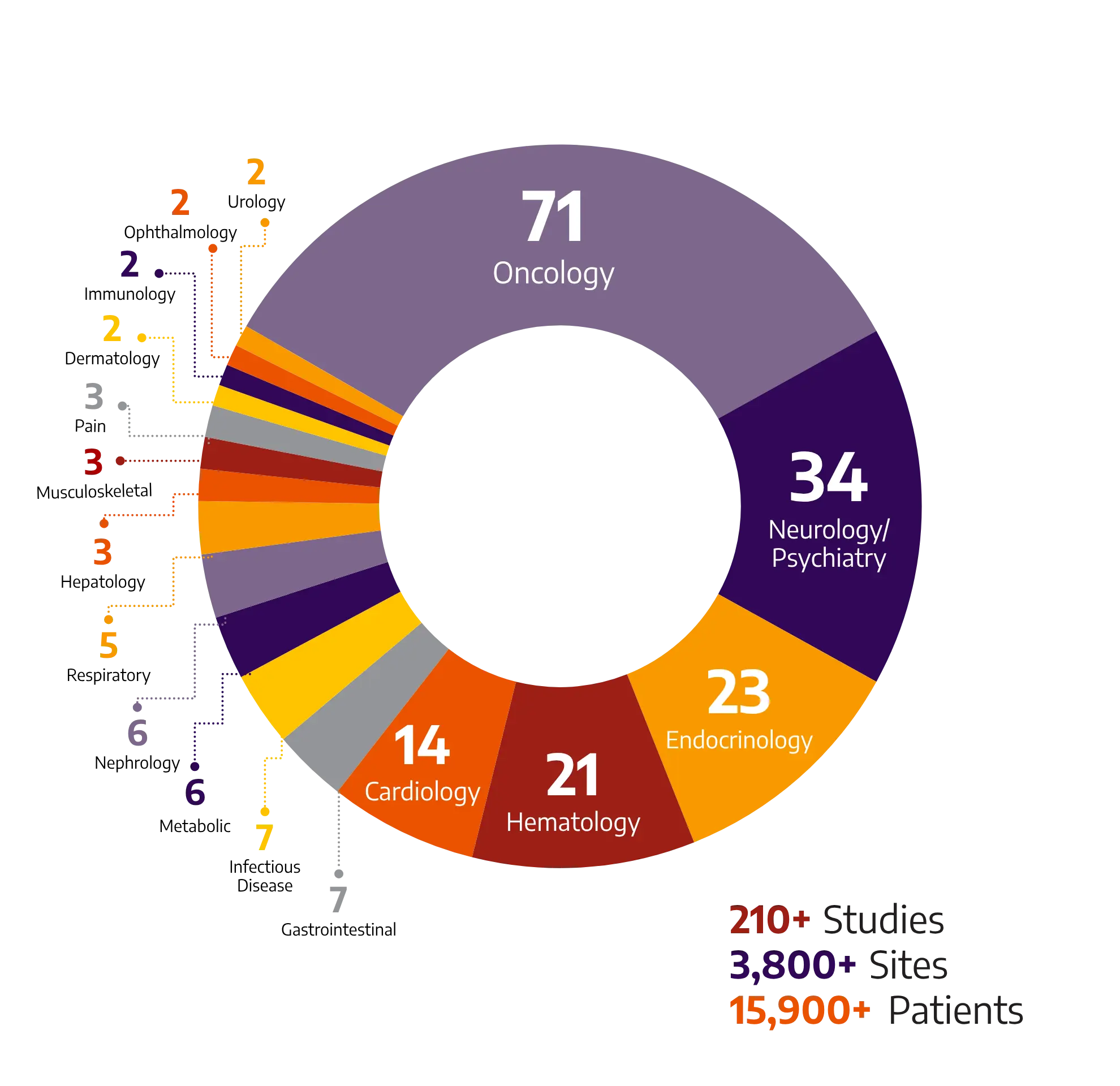
With global breadth and depth across a wide range of rare diseases, Allucent partners with biotech companies to bring innovative therapies to light.
Allucent’s rare and ultra-rare disease clinical trials expertise spans multiple therapeutic areas including neuroscience, autoimmune, pulmonary, genetic, metabolic, and oncology. It includes a variety of novel drug classes and precision medicine including gene therapies, stem cell therapies, biologics, GMOs, mRNA and antisense therapies.
Head, Advanced Therapeutics
(Rare and CGT)
Senior Medical Director,
Rare Diseases
Executive Medical Director,
Therapeutic Area Medical Lead,
Rare Diseases

Let us know how we can help you bring new therapies to light. Get in touch to get started.
Want to help small and mid-size biopharma companies change the therapeutic landscape?